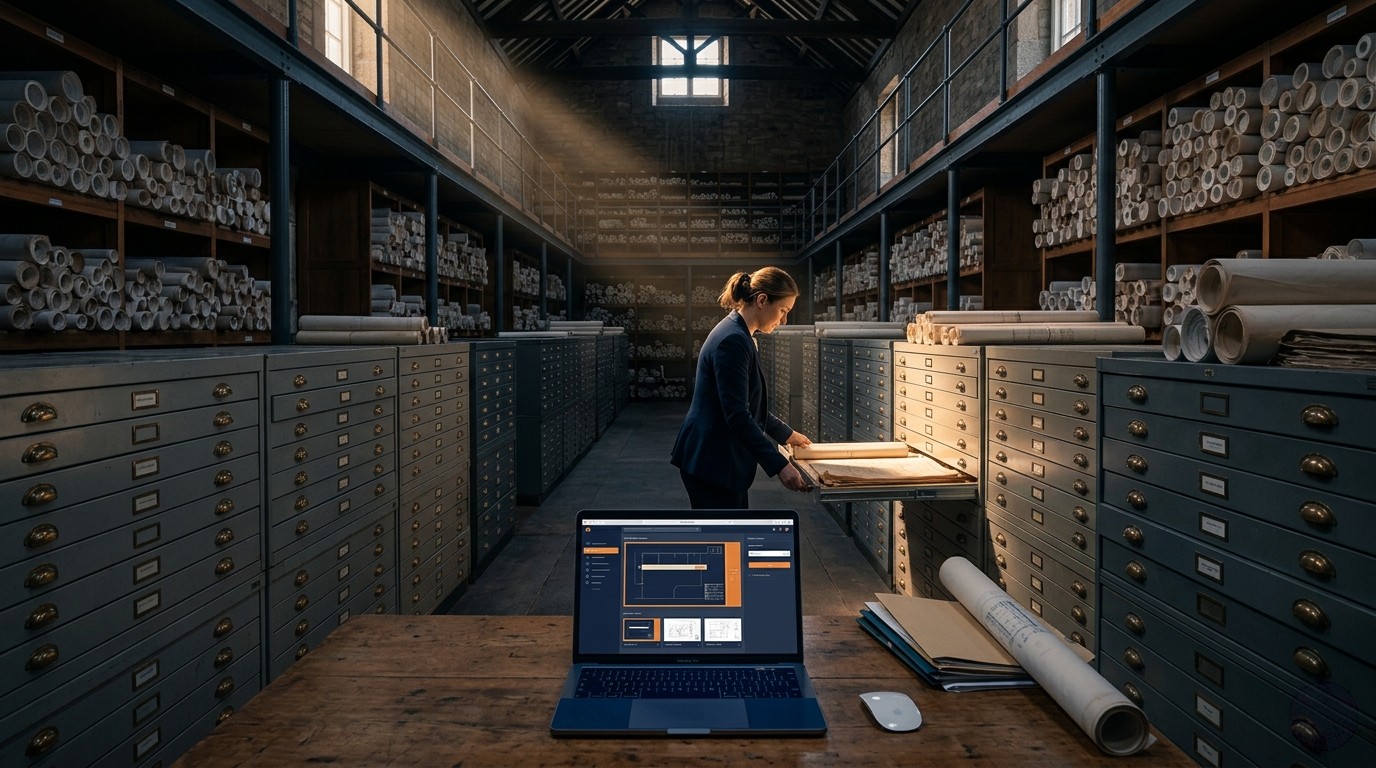
If your organisation has been operating for more than a decade, chances are you have a significant archive of paper drawings sitting in storage somewhere. These drawings represent years of accumulated design knowledge, but in their current form, they're difficult to access, impossible to share efficiently, and vulnerable to physical damage.
Modernising a legacy drawing archive doesn't have to be an overwhelming undertaking. With a practical strategy and the right approach, you can transform your paper archive into a searchable, shareable digital asset without disrupting your day-to-day operations.
Assessing Your Archive
Before you begin any conversion work, take time to understand what you have. A thorough assessment should answer these questions:
- Volume, How many drawings do you have? Count by project, by sheet, or estimate by storage volume. This drives the overall timeline and budget.
- Condition, Are the drawings in good physical condition, or are some deteriorating? Damaged drawings may need priority conversion before further degradation occurs.
- Frequency of use, Which projects or drawing sets are accessed most often? These should be prioritised for conversion.
- Regulatory requirements, Are there legal or compliance obligations to retain certain drawings? Understanding these helps determine which drawings need full CAD conversion versus simple scanning.
- Current organisation, How are drawings currently filed? By project, by date, by building type? Understanding the existing structure helps plan the digital filing system.
Scan vs Convert: Choosing the Right Approach
Not every drawing in your archive needs full CAD conversion. A practical strategy uses different approaches for different categories of drawing:
Full CAD Conversion
Produces fully editable vector files (DWG, DXF, PLN). This is the right choice for drawings that:
- Are actively used in current projects
- Will form the basis for future design work
- Need to be modified, annotated, or extended
- Require accurate measurement extraction
High-Quality Scanning
Produces raster images (TIFF, PDF) that preserve the visual content without creating editable geometry. Appropriate for:
- Historical records that need to be preserved but won't be actively used
- Drawings retained for compliance purposes
- Reference material that only needs to be viewed, not edited
Hybrid Approach
Scan everything for preservation, then convert selected drawings to CAD as and when they're needed. This is often the most cost-effective strategy for large archives, providing immediate preservation while spreading conversion costs over time.
Prioritisation Framework
With a large archive, you need a clear prioritisation system. Here's a practical framework:
Tier 1: Immediate Conversion (Months 1-3)
- Drawings for active projects currently under construction or design
- Drawings in poor physical condition that are at risk of further deterioration
- The most frequently requested historical drawings
Tier 2: Near-Term Conversion (Months 3-6)
- Drawings for properties or infrastructure likely to need maintenance or refurbishment
- Projects where clients have requested digital records
- Drawings needed for upcoming planning applications or building control submissions
Tier 3: Ongoing Batch Processing (Month 6+)
- Remaining archive drawings, processed in batches
- Historical records for long-term preservation
- Reference material that may be needed in the future
Setting Up Your Digital Archive
As drawings are converted, they need a home. A well-structured digital archive should include:
- Consistent naming conventions, Establish a file naming standard before you start: project code, discipline, sheet number, revision (e.g., "PRJ001-ARCH-101-RevA.dwg")
- Logical folder hierarchy, Organise by client or project, with sub-folders for disciplines and drawing types
- Backup strategy, Implement automated backup to at least two separate locations. Cloud storage combined with local backup provides both accessibility and resilience.
- Access controls, Define who can view, edit, and delete files. This is especially important if multiple teams access the archive.
- Metadata, Where possible, tag files with searchable metadata: project name, date, building type, discipline, and any other attributes relevant to your organisation.
Managing the Transition
The transition from paper to digital doesn't happen overnight, and it doesn't have to. Practical tips for managing the process:
- Don't wait for perfection, Start with what you have. The first batch of conversions will help you refine your requirements for subsequent batches.
- Involve your team, The people who use the drawings daily are best placed to identify which ones need conversion first and what specifications are needed.
- Set a realistic timeline, A large archive will take months to fully digitise. Build this into your planning and budget accordingly.
- Keep paper originals, Don't dispose of paper drawings immediately after conversion. Retain them for a defined period as a fallback until you're confident in the quality of the digital files.
- Track progress, Maintain a log of which drawings have been converted, which are in progress, and which remain. This prevents duplication and ensures nothing falls through the cracks.
The Long-Term Benefits
Organisations that complete the transition from paper to digital consistently report:
- Dramatic reduction in time spent searching for drawings
- Improved collaboration between offices, teams, and external partners
- Reduced physical storage costs
- Better protection of irreplaceable design records
- Ability to reuse historical design work as the basis for new projects
- Compliance with increasingly digital regulatory requirements
The investment in digitisation pays for itself many times over, but the benefits only start flowing once you begin the process.
Ready to Modernise Your Drawing Archive?
We handle projects of all sizes, from single drawings to entire archives. Get started with a free consultation.
Get a Free Quote